By Amir Dabiri Mehr
Political science researcher
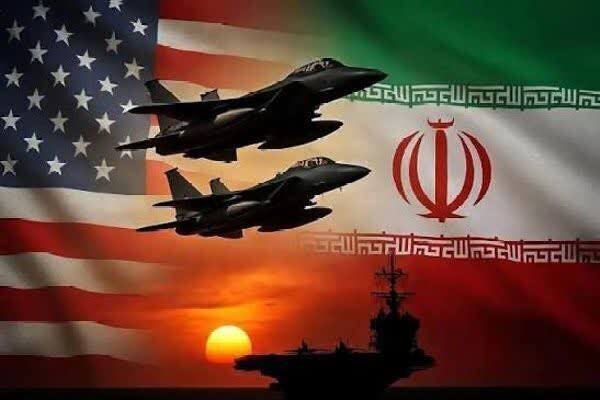
Following the prolonged closure of the Strait of Hormuz, the continuation of sporadic clashes between Iran and the United States, the mutual targeting of oil tankers, and the impact of this crisis on the global economy, many international observers, while expressing concern over the persistence of this trend, are also worried about its further escalation in the future.
Recent reciprocal attacks between Saudi Arabia and the Houthis in Yemen, as well as Israel’s renewed aggression against Lebanon, are signs that the tension between Tehran and Washington has not only affected the global economy but has also spread the level of military confrontation and insecurity to other parts of the Middle East. If this issue remains unresolved, the tension could take on even wider dimensions.
The formation of the Mecca Pact among Turkey, Pakistan, and Saudi Arabia is a joint regional measure and alliance aimed at creating deterrence against the potential dangers of this regional insecurity.
US President Donald Trump has recently said that the war with Iran will end after the congressional elections in November — that is, around two months from now — also indicate that the likelihood of military escalation in the coming days is high, especially given reports that the United States is studying and preparing to implement a plan to attack the nuclear facilities at Mount Kolang, also known as Pickaxe Mountain.
The referral of Iran’s nuclear file from the Board of Governors of the International Atomic Energy Agency to the United Nations Security Council is seen as paving the way for a possible US military action.
A reliable source close to the military forces of the Islamic Republic says: “In response to a possible attack on the nuclear facilities at Mount Kolang and the further intensification of economic pressure in the coming weeks, Iran intends to adopt aggressive behavior and escalate military tension. Evidence of this can be seen in the attacks on US military bases in Jordan, which have inflicted significant damage.” The remarks of Mohsen Rezaei, secretary of the Supreme National Security Council (SNSC), regarding Iran’s intention to define a new restricted zone for American ships in the Persian Gulf, amount to the declaration of a new battlefield with the United States.
Alongside this concerning outlook in the region, inside Iran many people who are enduring difficult economic conditions and witnessing the continuous depreciation of the national currency, unprecedented rises in commodity prices, and shortages of medicine are asking one another how long this tension will continue and whether keeping the Strait of Hormuz closed — and America’s reciprocal insistence on a naval .blockade — is worth the increasing economic pressure on Iran
The Islamic Republic, concerned about the destructive consequences of the continued naval blockade on the national economy and the possibility of internal unrest and protests, is seeking to establish new land and sea routes for importing goods via the Caspian Sea and the Eurasian region with Russia at its center.
One of the objectives of the recent visit by Iran’s Economy Minister Ali Madanizadeh to Moscow was precisely this matter; during the trip, negotiations were also held on finalizing the receipt of a one-billion-dollar loan from Russia.
In recent days, following the controversial remarks of former Iranian president Hassan Rouhani emphasizing that the Strait of Hormuz should not become a strait of war, and the widespread reactions of his opponents, a source close to the SNSC, who requested anonymity, exclusively told me “Individuals such as Mr. Rouhani who view the existing problem solely through the lens of the strait’s closure are committing a strategic error in analyzing the present situation. The Islamic Republic does not intend to keep the Strait of Hormuz closed permanently, but the responsibility for its continued closure lies with the United States, which has failed to fulfill its commitments under the Islamabad Understanding. Iran has the right to use its sole instrument of power within its territorial waters.”
The source, who previously held senior military and security positions in the Islamic Republic for years, added “Iran is engaged in a hybrid and multi-dimensional war with the United States and Israel. Over the past year, they have employed every measure, including surprise attacks, deception operations, attempts to ignite civil war, coups, blockade, and full-scale war. Of course, we believe that in all these plans, the United States has acted as a tool or plaything in the hands of the Zionists. For this reason, we place no trust in Washington’s promises and statements; only practical American actions that serve Iran’s interests can lead to a reduction in tensions.”
In response to the question of what steps the United States must take to reduce tension, the source stated “America’s participation in the assassination of the Leader, commanders, children, and innocent people constitutes the primary reasons for the Islamic Republic’s distrust. These actions have further intensified the people’s hatred and anger toward the enemy. Moreover, the destruction of the country’s infrastructure has inflicted heavy damage, while the naval blockade and intensification of sanctions not only fail to push Iran toward surrender but encourage it to take offensive actions against the United States. Therefore, the solution lies in halting America’s destructive policies and replacing them with confidence-building measures.”
According to this official of the Islamic Republic, the United States seeks, through cognitive warfare and media and propaganda campaigns, to conceal realities and portray the closure of the Strait of Hormuz by the Islamic Republic as the obstacle to establishing peace in the region. In this media atmosphere, it aims to close the file of the war without paying the price for its own actions. For this reason, the insistence of officials of the Islamic Republic on maintaining control over the Strait of Hormuz is not merely a military issue; it is a pretext and a field of power-testing for the realization of national rights. Accordingly, the SNSC, while emphasizing the exercise of Iran’s sovereignty over the Strait of Hormuz, simultaneously pursues the country’s other demands in a combined manner. The most important of these are: cessation of the war in Lebanon and Yemen, lifting of the naval blockade, removal of sanctions, release of Iran’s frozen assets in foreign banks, and, above all, a guarantee against any renewed violation of Iran’s territorial integrity.
In the view of officials of the Islamic Republic, as long as Washington is unwilling to take steps to compensate for the heavy damages of the two recent wars and continues its aggressive approach toward Iran, the Strait of Hormuz will remain an important and effective instrument in the field of confrontation and power-testing between the two countries. The experience of the past six months has also shown that this instrument can be effective in achieving the objectives of the Islamic Republic. In contrast, some politicians and experts inside Iran believe that Tehran should use the Strait of Hormuz bargaining chip as soon as possible, because time will not always be on Iran’s side, and this bargaining chip may lose its value and
credibility in the not-too-distant future.